Curious About Nasyam Treatment? What to Know Before Booking an Ayurvedic Nasyam Session in Melbourne

Thinking About Booking Nasyam Treatment in Melbourne?
When exploring a traditional wellness service for the first time, it is natural to have questions about the procedure, products, safety, and what to expect.
Nasyam, also known as Nasya, is a traditional Ayurvedic procedure involving the administration of selected substances through the nasal passages. Because the procedure involves the nose and nasal tissues, understanding the technique and its suitability is especially important.
At Bliss Healing Centre in Deer Park, Melbourne, you can enquire about available Ayurvedic services and ask for details before deciding whether to proceed.
This guide explains what to consider before booking a Nasyam session.
What Is Nasyam Treatment?
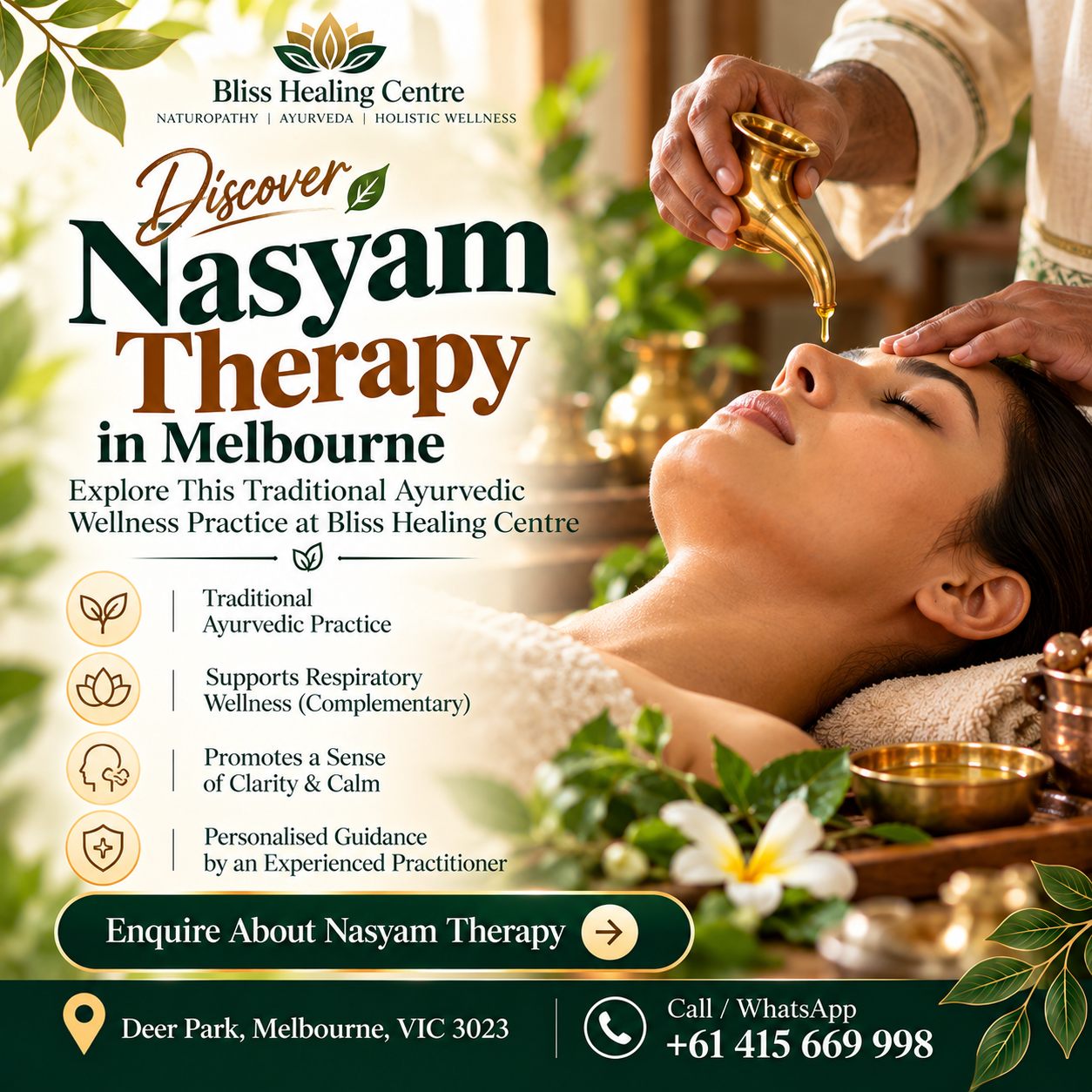
In Ayurveda, Nasyam is traditionally described as a procedure that administers substances through the nasal route. Depending on the method, these may include oils or other preparations.
Traditional approaches can differ in their ingredients, preparation, and application. A provider should be able to explain the exact procedure being offered rather than relying only on the general term “Nasyam.”
It is important to remember that traditional use does not automatically demonstrate safety or effectiveness for a particular health concern.
Five Questions to Ask Before Your Nasyam Appointment
1. What Is the Exact Procedure?
Ask the practitioner to explain the process, how the substance is administered, and how long the session is expected to last.
2. What Ingredients Will Be Used?
Request the product name and ingredient list. If possible, ask to see the product packaging and check whether it is intended for the proposed route of administration.
Do not assume that an oil suitable for external massage is also safe for use inside the nose.
3. What Are the Practitioner’s Qualifications?
Ask about the practitioner’s relevant education, training, and experience. You should be able to understand who will perform the procedure and the scope of their practice.
4. Are There Reasons I Should Avoid the Procedure?
Tell the practitioner about relevant health conditions, allergies, medications, pregnancy, nasal symptoms, recent procedures, or previous reactions.
Seek medical advice if you are unsure whether the procedure is suitable for you.
5. What Are the Possible Risks and Aftercare Requirements?
Ask about potential adverse effects, what to do if irritation occurs, and which symptoms require medical attention. Make sure you understand the instructions before agreeing to proceed.
Understanding Safety Before a Nasal Procedure
The nose is a sensitive area, and the safety of any nasal procedure depends on the substances used, their formulation, how they are administered, and the individual’s circumstances.
Avoid using unverified oils or preparations inside your nose. If a product is not specifically intended for nasal use, do not assume that it is appropriate for this purpose.
Stop and seek appropriate medical advice if a procedure causes significant pain, bleeding, breathing difficulty, or another concerning reaction. Severe breathing difficulty requires urgent medical attention.
People with persistent nasal congestion, allergies, sinus symptoms, or other respiratory concerns should consult a qualified healthcare professional for assessment.
Enquire About Nasyam Treatment in Melbourne
Enquire About Nasyam Treatment in Melbourne
Bliss Healing Centre offers wellness services in Deer Park for people interested in traditional and complementary practices.
If you are considering Nasyam treatment, contact the centre to confirm availability and ask about the procedure, ingredients, practitioner qualifications, costs, and suitability.
Bliss Healing Centre
- Location: Deer Park, Melbourne, VIC 3023, Australia
- Call/WhatsApp: +61 415 669 998
FAQs
Understand the procedure, substances used, practitioner qualifications, possible risks, aftercare, and whether it is suitable for your circumstances.
Not necessarily. Nasyam refers to a traditional Ayurvedic procedure, and techniques and preparations may differ from ordinary nasal products. Do not substitute one product or procedure for another without appropriate professional guidance.
Some traditional methods use oils or other preparations. Ask the provider for the exact ingredients and confirmation that the product is appropriate for the intended use.