Nasyam in Ayurveda: Explore Traditional Nasal Therapy at Bliss Healing Centre in Deer Park, Melbourne
Introduction: Understanding Nasyam in Ayurveda
Ayurveda is a traditional system of wellness originating in India. It includes a variety of practices that have developed over centuries, with different procedures traditionally used for different purposes.
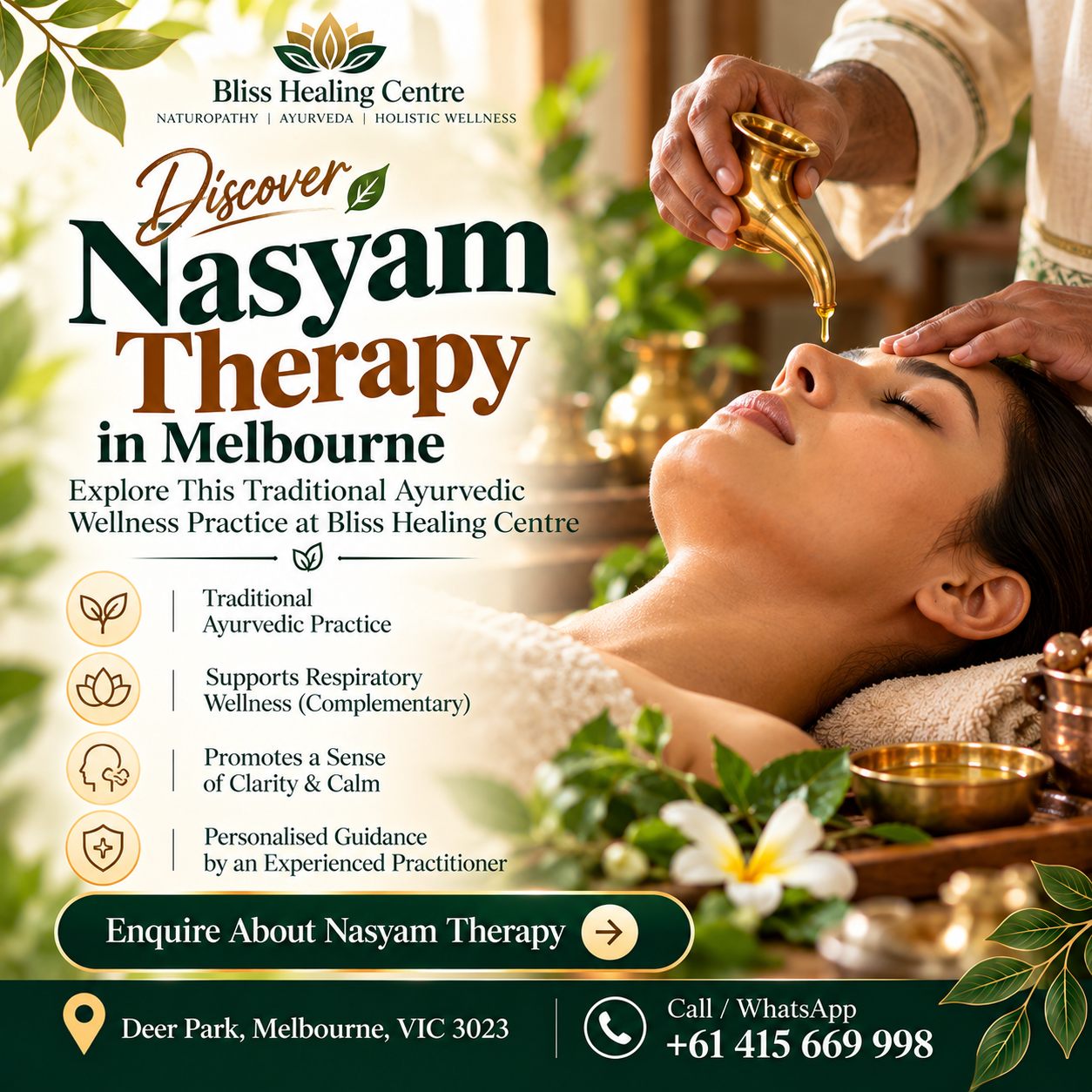
One such procedure is Nasyam, commonly referred to as Nasya. It involves administering selected substances through the nasal passages as part of certain Ayurvedic approaches.
For people interested in traditional Ayurvedic practices in Melbourne, understa KB nding Nasyam can be a starting point for informed discussion with a suitably qualified practitioner.
Bliss Healing Centre in Deer Park provides a place to enquire about available wellness services. Contact the centre directly to confirm whether Nasyam is currently offered and to learn about the procedure, practitioner qualifications, and suitability.
What Does Nasyam Mean in Ayurveda?
Nasyam is a traditional Ayurvedic procedure associated with administering substances through the nose. Depending on the method, these substances may include oils or other preparations.
In traditional Ayurvedic descriptions, Nasyam is discussed as part of a broader system of practices. The specific method, preparation, and circumstances in which it is used can vary.
It is important to distinguish traditional Ayurvedic explanations from claims supported by modern clinical research. A practice having a long history does not automatically establish that it is effective or safe for every person or medical condition.
How Is Nasyam Traditionally Described?
Traditional approaches to Nasyam can differ according to the Ayurvedic method being followed and the preparation selected.
A practitioner may describe the process, intended purpose, products, and precautions associated with a particular method. Before considering a session, ask for a clear explanation of what will happen and why the procedure is being recommended.
The term “Nasyam” alone does not provide enough information to determine the ingredients, application technique, risks, or suitability of a particular service.
What Should You Understand Before Exploring Nasyam?
The Ingredients Matter
Ask for the exact names and ingredients of any substances proposed for nasal administration. A product intended for external massage should not automatically be assumed safe for use inside the nose.
The Method Matters
Different techniques may have different preparation and administration requirements. Ask the practitioner to explain the procedure in language you understand.
Your Individual Circumstances Matter
Allergies, medications, existing nasal or respiratory conditions, pregnancy, and recent nasal procedures may affect whether a particular procedure is appropriate.
Professional Guidance Matters
Ask about the practitioner’s relevant qualifications, training, and scope of practice. If you have a medical concern, seek advice from an appropriate healthcare professional before proceeding.
Explore Ayurvedic Wellness at Bliss Healing Centre
Bliss Healing Centre is located in Deer Park, Melbourne, and offers wellness services for people interested in traditional and complementary approaches.
If you are researching Nasyam in Ayurveda, contact the centre to ask whether the service is currently available. You can also enquire about the exact procedure, products used, practitioner qualifications, appointment arrangements, and suitability.
Understanding these details is more useful than relying on broad claims about traditional treatments.
Enquire Today
Bliss Healing Centre
- Location: Deer Park, Melbourne, VIC 3023, Australia
- Call/WhatsApp: +61 415 669 998
FAQs
Nasyam, also known as Nasya, is a traditional Ayurvedic procedure involving the administration of selected substances through the nasal passages.
Yes. Nasyam is described in traditional Ayurvedic practice. However, the evidence for its safety and effectiveness for specific medical conditions should be evaluated separately.
Traditional methods may involve oils or other preparations. The exact ingredients depend on the technique, so always ask the practitioner for details.